

Overview
DARO sends an HTTP/HTTPS GET request to your server when users complete rewarded video ads. Callbacks send immediately after completion but may delay up to several minutes depending on network conditions. Use the timestamp parameter to verify time difference between impression and callback. Retry Logic: DARO retries up to 2 times if your server doesn’t respond within 5 seconds.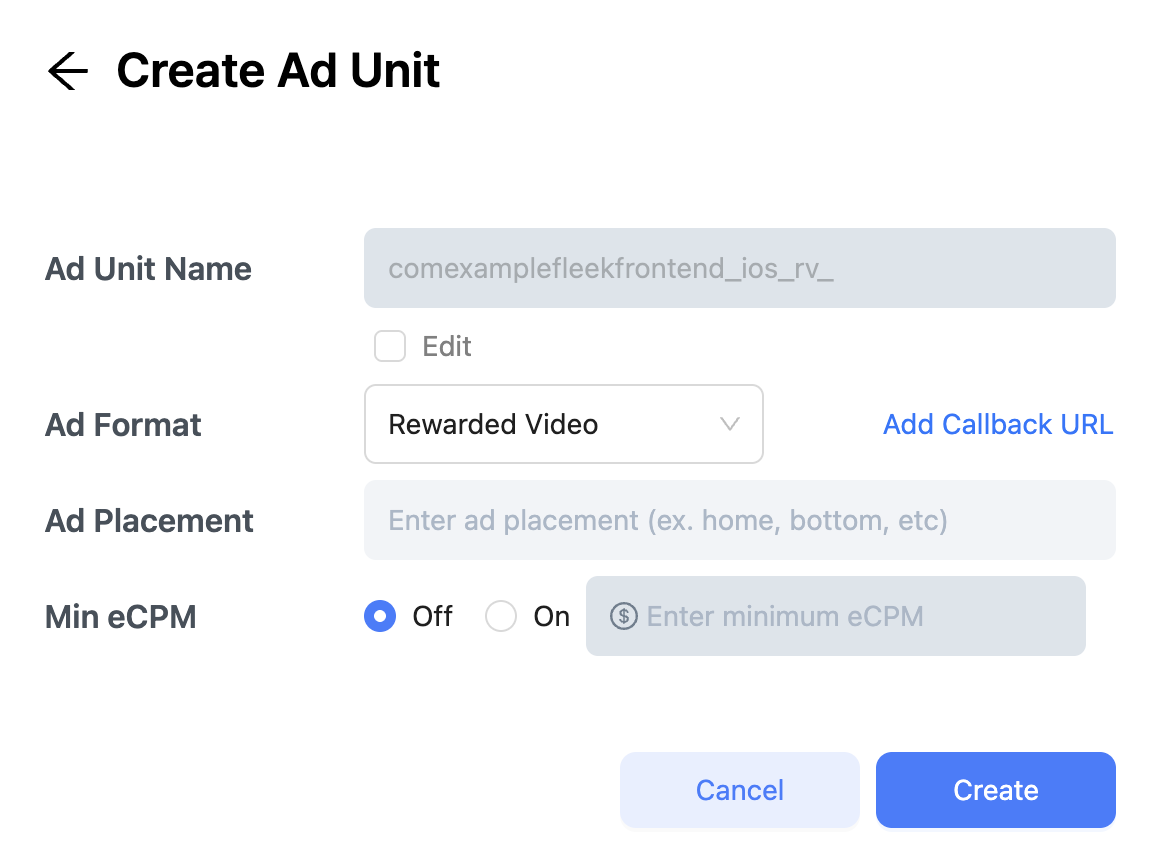
Callback URL Example
Callback URL Request Example
Query Parameters
Parameters included as query strings in callback URL. Optional parameters (custom_data and user_id) pass as null if not set.
- Find your callback verification key at https://dashboard.daro.so/service/account
Response Status Codes and Retries
DARO uses the HTTP response status code to determine whether callback delivery is complete. A408, 429, or 5xx response, or a network error, triggers automatic retries. If those attempts continue to fail, the callback may be sent again later.
The response body can follow your own requirements. DARO determines whether to retry from the HTTP status code, not the response body.
Handle Duplicate Callbacks
The same callback may be delivered more than once because of network conditions or retries. Process callbacks idempotently usingtransaction_id: store the processing result, and if the same transaction_id arrives again, do not grant the reward twice and respond with 2xx based on the stored result.
Set Publisher-Defined User ID and Custom Data
Setuser_id and custom_data on the client side using platform-specific SDK methods. These optional values send with the callback.
Platform Guides: